

How to Choose a Flow Wrapper for Your Food Production Line
A flow wrapper can look simple from the outside, but the wrong configuration can create problems with feeding, sealing, changeovers, and production speed.
If you are comparing flow wrap machines for a food production line, the better question is not “Which machine is fastest?” It is “Which machine fits my product and the way my factory actually operates?”
Before Comparing Machines, Define the Product
The product should be the starting point.
A flow wrapper may handle biscuits, cookies, bakery products, snacks, frozen foods, and other products, but these applications do not necessarily require the same machine configuration.
Three products with similar dimensions can still behave differently during feeding and sealing.
Product Information to Prepare
|
Product Factor |
Why It Matters |
|
Length / width / height |
Determines machine and film dimensions |
|
Weight |
Affects feeding and handling |
|
Shape |
Influences product alignment |
|
Fragility |
Determines handling requirements |
|
Surface condition |
Can affect sealing |
|
Product orientation |
Determines feeding design |
This is why sending product samples or clear product specifications to a manufacturer can be more useful than simply asking for a standard price.
The Packaging Format Comes Next
Once the product is understood, define what the finished package should look like.
For example:
Individual biscuit → pillow pack
Grouped bakery product → multipack
Long or irregular product → specialized flow wrapping
The package dimensions also influence film width, sealing configuration, feeding, and machine setup.
If your factory produces several SKUs, the question becomes more complex because the machine needs to accommodate product and package changes efficiently.
Speed Is Important, But It Is Not the Whole Story
Machine speed is one of the first specifications buyers usually compare.
However, actual production output can be affected by:
- Product feeding
- Product spacing
- Film changes
- Product changeovers
- Rejected products
- Downstream equipment
- Operator intervention
For example, a flow wrapper may have a high theoretical speed, but if the upstream feeding system cannot maintain a stable product flow, the line cannot consistently achieve that output.
A more useful KPI is therefore:
Stable line output rather than maximum machine speed.
How to Estimate the Real Requirement
Instead of asking:
“How many packs per minute can this machine reach?”
Ask:
“How many good packs per minute does my complete line need to produce?”
That difference can significantly change the equipment configuration.
Rotary or Box Motion? Make the Decision From the Product
Rotary and box motion machines are already covered in detail elsewhere on your website. The purpose here is to provide a practical selection rule rather than repeat the mechanism.
|
Situation |
Direction to Consider |
|
Small, regular products |
Rotary flow wrapping |
|
High-throughput application |
Rotary flow wrapping |
|
Large products |
Box motion |
|
Irregular products |
Box motion |
|
Longer sealing dwell required |
Box motion |
|
Product handling is the main challenge |
Evaluate box motion |
Soontrue's existing flow wrapping portfolio includes both rotary and box motion solutions for different product requirements.
When Rotary Motion Makes More Sense
Rotary flow wrapping is a strong candidate when:
Product geometry is consistent
Product feeding can be synchronized
High output is important
Package dimensions are relatively stable
This is particularly relevant to high-volume applications such as snacks, bars, and other regular products.
When Box Motion Deserves More Attention
Box motion can be considered when product size, shape, or sealing requirements make conventional high-speed wrapping more difficult.
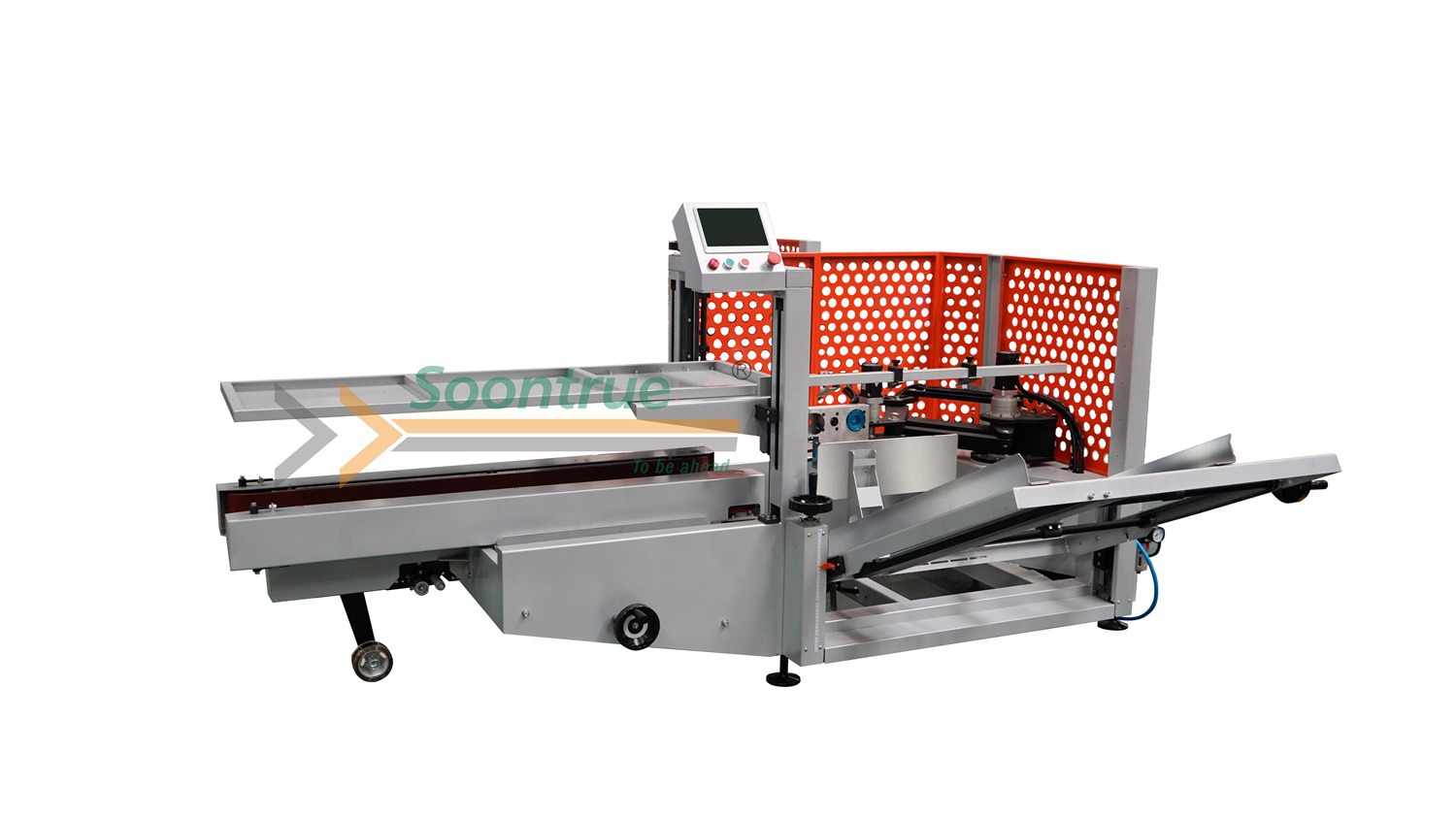
Soontrue's existing box motion solutions are positioned for larger, irregular, sticky, or challenging products, making the technology particularly relevant to applications where product handling and seal quality matter more than simply maximizing speed.
Don't Forget the Feeding System
This is one of the most important parts of flow wrapper selection.
The wrapper can only perform as well as the product arriving at its infeed.
Imagine a bakery line where biscuits arrive unevenly. The operator may need to manually correct spacing, creating:
- Empty packages
- Product jams
- Uneven output
- Additional labor
- Film waste
The solution may not be a faster wrapper. It may be a better feeding system.
Questions to Ask About Feeding
- How are products currently fed?
- Do products need alignment?
- Are products individually wrapped or grouped?
- Does the product change orientation?
- Is automatic counting required?
- Will several production lines feed one wrapper?
This is where a packaging machine supplier should evaluate the application rather than sell a standard machine.
What About Film and Sealing?
Film selection is another area where purchasing decisions can go wrong.
The machine should be evaluated together with the intended packaging material because film characteristics can affect:
- Film tracking
- Forming
- Sealing temperature
- Seal strength
- Package appearance
- Production stability
If you already have a preferred film structure, provide that information during the machine selection process.
For factories planning to change packaging materials later, discuss the expected range before finalizing the machine.
Think About Changeover Before You Buy
A machine running one SKU continuously is a very different application from a machine switching between ten products every day.
If your factory produces multiple SKUs, consider:
Product Changeover
How quickly can the machine be adjusted between products?
Film Changeover
How easy is it to replace and align film?
Recipe Management
Can operators save and recall product settings?
Operator Training
Can normal adjustments be performed without extensive mechanical intervention?
Modern servo-controlled systems can make synchronization and recipe-based operation easier, which is particularly useful for multi-SKU production.
Choosing a Flow Wrapper by Production Scenario
Instead of selecting a machine based on one specification, consider which scenario best matches your factory.
|
Production Scenario |
Main Priority |
Selection Focus |
|
One product, high volume |
Throughput |
High-speed flow wrapper |
|
Many SKUs |
Flexibility |
Changeover and recipe control |
|
Large bakery products |
Handling |
Box motion / suitable feeding |
|
Small regular products |
Speed |
Rotary flow wrapping |
|
Growing factory |
Scalability |
Automatic feeding + wrapper |
|
Fully automated plant |
Integration |
Wrapper + upstream/downstream equipment |
This approach is more useful than simply comparing machines by speed.
When Should a Flow Wrapper Become Part of a Larger Line?
A standalone machine may be sufficient for a simple operation.
However, once manual handling becomes the bottleneck, integration becomes more valuable.
A typical automated workflow can be:
Product Distribution → Feeding → Flow Wrapping → Inspection → Cartoning → Case Packing → Palletizing
Soontrue's product range extends beyond flow wrapping into cartoning, case packing, robotic systems, and palletizing. This makes the wrapper easier to evaluate as one part of a larger automation project rather than an isolated machine.
For factories planning expansion, this can be an important consideration from the beginning.
A Practical Flow Wrapper Buying Checklist
Before contacting a manufacturer, prepare the following:
|
Category |
Information |
|
Product |
Type, size, weight, shape |
|
Packaging |
Bag size, film, package style |
|
Output |
Packs/min, daily production |
|
Feeding |
Manual / automatic / existing system |
|
SKUs |
Number of products |
|
Changeover |
Required frequency |
|
Factory |
Layout and available space |
|
Automation |
Current and future requirements |
This information allows the supplier to evaluate the application much more accurately.
Soontrue Flow Wrapping Solutions
Soontrue provides horizontal flow wrapping equipment covering different product and production requirements, including rotary and box motion technologies.
The company's current flow packaging portfolio also includes full-servo solutions and specialized machines for bakery, snack, confectionery, and other applications.
For example, Soontrue's SI-150 is positioned for products such as biscuits, crackers, cookies, cakes, dry bread, and potato chips.
The key is not choosing the most advanced machine available. It is choosing the configuration that fits the actual product, feeding process, output target, and future production plan.
Conclusion
A flow wrapper should be selected around the product and production process, not around a speed number alone. The right combination of feeding, wrapping, sealing, changeover, and automation can make a much bigger difference to daily production. Send Soontrue your product specifications, packaging requirements, and target output to discuss a flow wrapping solution built around your production line.
FAQs
How do I know which flow wrapper is suitable for my product?
Start with product dimensions, weight, shape, fragility, target package, and required output. Product samples can also help the manufacturer evaluate feeding and wrapping performance.
Should I choose rotary or box motion?
Rotary motion is generally worth considering for regular products and high-throughput applications. Box motion becomes more relevant when products are larger, irregular, or require more controlled sealing.
Is the fastest flow wrapper always the best choice?
No. Actual production depends on product feeding, changeovers, film handling, downstream equipment, and other parts of the line.
Can one flow wrapper package different products?
Potentially, if the products and package sizes fall within the machine's suitable operating range. The number of SKUs and required changeover frequency should be considered before purchase.
What film should I use for a flow wrapper?
The appropriate film depends on the product, package requirements, sealing conditions, and material properties. Discuss the intended film with the machine manufacturer before finalizing the configuration.
Can Soontrue integrate a flow wrapper with other packaging equipment?
Yes. Depending on the project, the flow wrapper can be evaluated alongside feeding, cartoning, case packing, and other automation equipment.
What should I send to Soontrue when requesting a quotation?
Send product dimensions, weight, photos or samples, target output, package size, film information, current feeding method, and any existing equipment.