

Automatic Flow Wrapping Machine: Is It Worth It?
As manufacturers face rising labor costs, tighter delivery schedules, and increasing pressure for consistent packaging quality, automation has become a central topic in packaging operations. Among the many automation solutions available today, the automatic flow wrapping machine stands out as one of the most widely adopted systems across food, pharmaceutical, and daily-use product industries.
But is investing in an automatic flow wrapping machine truly worth it? Or does it only make sense for large-scale factories with massive output requirements?
In this article, we take a practical, factory-level view—examining how automatic flow wrapping machines work, where they deliver real value, and when the investment makes sense. We'll also look at different machine types, including automatic horizontal flow pack machines, box motion flow wrappers, and complete flow pack packaging machines, helping you make a well-informed decision.
What Is an Automatic Flow Wrapping Machine?
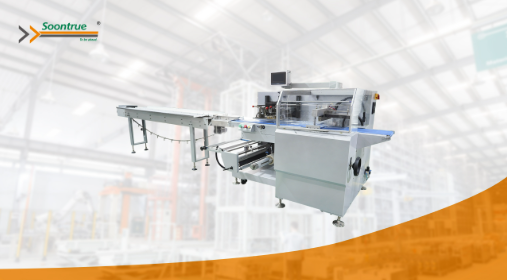
An automatic flow wrapping machine is a continuous-motion or intermittent-motion packaging system designed to wrap individual products in a sealed film using a horizontal flow process. Products are fed into the machine, wrapped in film, sealed longitudinally, and cut into individual packages at high speed.
This packaging method—often referred to as flow pack packaging—is widely used because it provides:
- High packaging efficiency
- Consistent seal quality
- Excellent product protection
- A clean, professional appearance
Depending on configuration, the same flow packaging machine can handle a wide variety of products, from baked goods and frozen foods to medical supplies and household items.
Automatic Horizontal Flow Pack Machine vs Other Packaging Methods
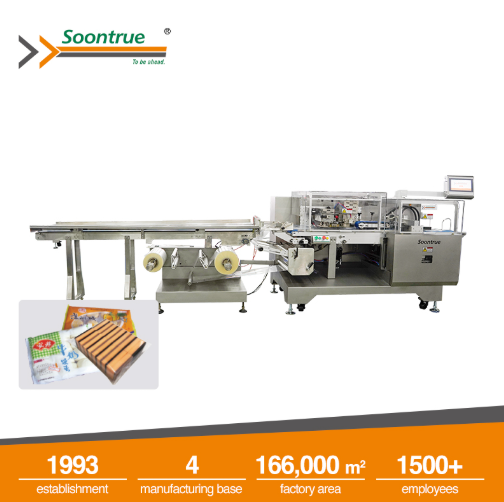
One of the most common configurations is the automatic horizontal flow pack machine, sometimes also called an automatic horizontal flow wrap machine. These machines are particularly suitable for solid, regularly shaped products that can be conveyed smoothly into the wrapping area.
Compared with vertical packaging machines, horizontal flow wrappers offer several advantages:
- Better handling of solid or fragile products
- Easier integration with automatic feeding systems
- More flexibility for multi-product or mixed SKU lines
- Higher packaging speeds for single-piece items
For manufacturers packaging items such as bread, biscuits, chocolate bars, soap, or medical disposables, horizontal flow wrapping is often the most practical solution.
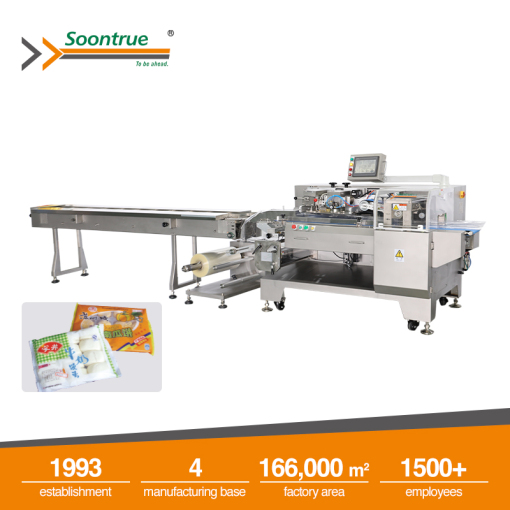
Understanding Box Motion Flow Wrappers
A box motion flow wrapper is a specialized type of flow wrapping machine designed for products that require higher sealing precision or gentler handling. Unlike rotary end sealers, box motion systems use a controlled, rectangular sealing motion that synchronizes with product movement.
Box motion flow wrappers are especially valuable when:
- Packaging fragile or easily deformed products
- Working with thicker or specialty films
- Running at high speeds while maintaining seal integrity
- Packaging products with variable lengths
While box motion systems typically involve a higher initial investment, they often deliver better long-term results in terms of reduced waste, fewer seal failures, and improved packaging consistency.
Where Automatic Flow Wrapping Machines Add Real Value
1. Production Efficiency and Output Stability
One of the strongest arguments for automation is production efficiency. Manual or semi-automatic packaging often introduces variability—output fluctuates depending on operator experience, fatigue, and shift changes.
An automatic flow wrapping machine provides:
- Stable output per hour
- Predictable production planning
- Reduced dependence on manual labor
For growing factories, this stability alone can justify the investment.
2. Packaging Quality and Brand Consistency
Packaging is often the first thing customers notice. Inconsistent seals, wrinkled film, or misaligned prints can negatively affect brand perception.
Modern flow pack packaging machines deliver:
- Uniform package appearance
- Consistent sealing temperature and pressure
- Accurate cutting and positioning
This is particularly important in food and pharmaceutical packaging, where both aesthetics and compliance matter.
3. Labor Cost Reduction (But Not Elimination)
It's important to be realistic: an automatic flow wrapping machine does not completely remove the need for labor. Operators are still required for:
- Film changes
- Product feeding supervision
- Quality checks
- Basic maintenance
However, automation significantly reduces repetitive manual tasks, allowing factories to reallocate labor to higher-value roles rather than eliminating jobs outright.
Is an Automatic Flow Wrapping Machine Worth It for Small or Medium Manufacturers?
This is one of the most common questions—and the answer depends on more than just production volume.
An automatic flow wrapping machine can be worth the investment for small and medium manufacturers if:
- Product demand is stable or growing
- Labor availability is limited or costly
- Product quality consistency is critical
- Frequent packaging errors or rework occur
In many cases, manufacturers underestimate the hidden costs of manual packaging, such as product damage, inconsistent sealing, and downtime caused by operator turnover.
Film Flexibility and Material Compatibility
Modern automatic horizontal flow wrap machines support a wide range of packaging films, including:
- OPP / CPP
- BOPP
- PE laminated films
- Specialized barrier films for MAP packaging
This flexibility allows manufacturers to adapt packaging materials as sustainability requirements or cost structures change—an increasingly important factor in long-term investment decisions.
Integration with Complete Packaging Lines
A standalone machine is only part of the equation. The real value often comes from how well the flow packaging machine integrates into a complete packaging line.
Automatic flow wrapping machines can be seamlessly combined with:
- Automatic feeding systems
- Cartoning machines
- Case packers
- Checkweighers and metal detectors
This level of integration is where automation delivers its strongest ROI, especially in medium to high-output facilities.
Choosing the Right Flow Packaging Machine Manufacturer
Not all machines—and not all manufacturers—are the same. Beyond machine specifications, factors such as engineering support, customization capability, and long-term service availability are equally important.
As a flow packaging machine manufacturer, Soontrue has spent decades working closely with food and non-food manufacturers worldwide. From our perspective, a successful packaging project is not about selling a machine—it's about matching the right configuration to the customer's actual production conditions.
In our own experience, the most successful installations happen when:
- Product characteristics are fully tested in advance
- Feeding and discharge systems are engineered together
- Future capacity expansion is considered from the start
That's why, at Soontrue, we focus on application-driven solutions rather than one-size-fits-all equipment.
Total Cost of Ownership: Looking Beyond the Purchase Price
When evaluating whether an automatic flow wrapping machine is worth it, focusing only on purchase price can be misleading. A more accurate assessment considers total cost of ownership, including:
- Energy consumption
- Film utilization efficiency
- Maintenance requirements
- Spare parts availability
- Downtime risk
In many cases, a slightly higher initial investment results in lower operating costs and better long-term reliability.
When an Automatic Flow Wrapping Machine May Not Be Worth It
Despite their advantages, automatic flow wrapping machines are not always the right solution. They may not be ideal if:
- Production volumes are extremely low or irregular
- Products vary significantly in shape without standardization
- Budget constraints prevent proper line integration
In such cases, semi-automatic solutions or outsourcing packaging may be more practical short-term options.
Final Verdict: Is It Worth It?
So, is an automatic flow wrapping machine worth it?
For manufacturers seeking consistent output, reliable packaging quality, and scalable production, the answer is very often yes. Whether using an automatic horizontal flow pack machine, a box motion flow wrapper, or a fully integrated flow pack packaging machine, automation delivers measurable benefits when applied thoughtfully.
If you're considering taking the next step toward packaging automation, working with an experienced partner matters just as much as the machine itself.
As a professional Soontrue, we offer a wide range of automatic flow wrapping solutions and help customers choose the right configuration based on real production needs—so you can invest with confidence and achieve long-term value.