

Food Automatic Production Machinery vs Manual Processing: Which Is Right for Your Factory?
As the global food industry continues to scale, manufacturers are under increasing pressure to improve efficiency, ensure product consistency, and meet strict hygiene standards. One of the most common strategic decisions facing food factories today is whether to rely on traditional manual processing or transition to food automatic production machinery.
This decision is especially important for factories producing structured foods such as dumplings, wontons, and siumai—products that require precise forming, filling, and sealing. In this article, we explore the fundamental differences between manual processing and automated production, evaluate which approach is best suited for different factory types, and explain how modern solutions such as dumpling making machines, wonton making machines, and siumai making machines can support sustainable growth. We will also reference how experienced manufacturers like Soontrue support factories in making this transition.
Understanding Manual Food Processing in Modern Factories
Manual food processing remains deeply rooted in many regions, particularly for traditional or artisanal products. Skilled workers shape dough, portion fillings, and form products by hand, relying on experience rather than mechanical precision.
For small-scale operations, manual processing offers flexibility. Recipes can be adjusted quickly, shapes can vary, and production can be customized without technical constraints. This approach often appeals to niche brands that prioritize handcrafted appeal or operate with limited daily output.
However, as production volume increases, the disadvantages of manual processing become increasingly evident. Output is restricted by labor availability and physical endurance. Product consistency varies from worker to worker, leading to uneven weight, shape, or sealing quality—issues that can affect downstream packaging and freezing processes. Labor-intensive production also results in higher long-term costs and greater exposure to workforce shortages.
For factories seeking stable growth, relying solely on manual labor often becomes a bottleneck rather than a strength.
What Is Food Automatic Production Machinery?
Food automatic production machinery refers to integrated systems designed to mechanize and automate repetitive food processing tasks such as dough sheeting, filling distribution, forming, and shaping. These machines are engineered to deliver high output while maintaining consistent quality and hygiene.
In the context of Asian and convenience foods, automation plays a particularly important role. Products like dumplings, wontons, and siumai require precise portioning and consistent geometry—tasks that machines handle far more reliably than manual labor at scale.
Modern automated food machinery is typically built with food-grade stainless steel, modular designs, and programmable controls, making it suitable for continuous industrial production.
Automated Solutions for Dumplings, Wontons, and Siumai
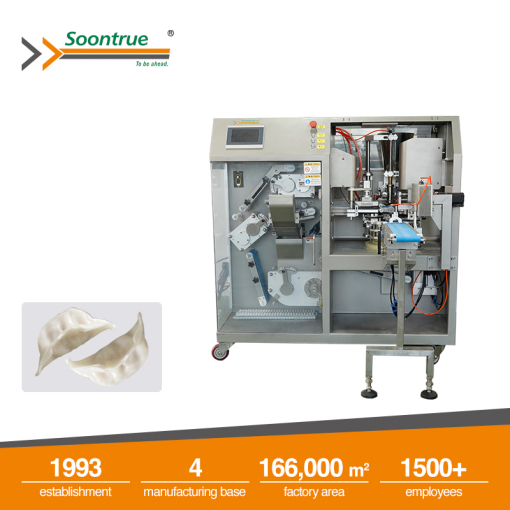
Dumpling Making Machines
A dumpling making machine automates the complete forming process, from dough flattening to filling placement and edge sealing. These machines are designed to produce dumplings with uniform thickness, weight, and appearance, which is critical for frozen food lines and mass distribution.
Compared with manual dumpling production, automated machines significantly increase hourly output while minimizing waste caused by inconsistent shaping or overfilling.
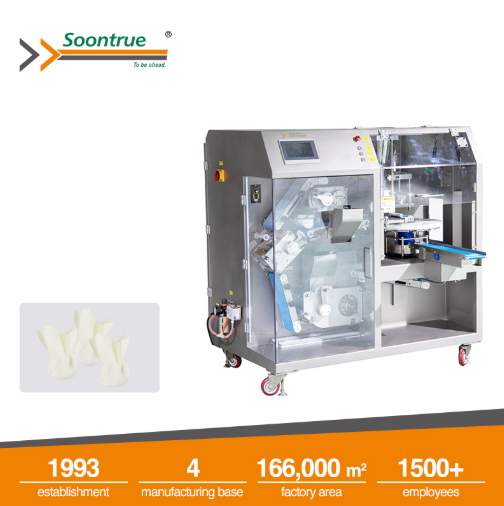
Wonton Making Machines
A wonton making machine focuses on precise folding and shaping of thin wrappers with controlled filling portions. Wontons are particularly sensitive to sealing quality, as poor folding can cause filling leakage during cooking or freezing.
Automation ensures that each wonton meets the same structural and visual standards, making it easier to integrate with downstream cooking, freezing, or packaging systems.
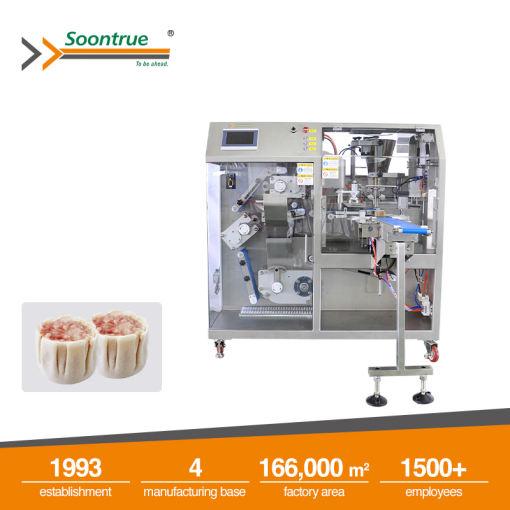
Siumai Making Machines
A siumai making machine (also known as a shumai or siomai machine) automates the production of open-top dumplings commonly used in dim sum and ready-meal applications. These machines are designed to maintain a consistent open structure while ensuring accurate filling weights.
For factories supplying hotels, restaurants, and retail frozen food markets, automation ensures product uniformity that manual shaping cannot reliably deliver at scale.
Comparing Manual Processing and Automated Production
When evaluating manual processing versus automated production, the differences become clear when examined across key operational dimensions.
In terms of production capacity, manual processing is inherently limited. Even with skilled workers, output increases linearly with labor input. Automated food production machinery, by contrast, operates continuously and can produce thousands of units per hour with minimal interruption.
From a quality consistency perspective, manual production depends heavily on individual skill levels and physical condition. Automation eliminates this variability by applying the same parameters to every product, ensuring consistent size, weight, and shape.
Labor cost and availability are also critical considerations. Manual processing requires ongoing recruitment, training, and supervision. Automated machinery reduces dependence on manual labor and helps factories remain resilient amid rising wages and labor shortages.
Regarding hygiene and food safety, automated machinery offers clear advantages. Enclosed systems, smooth stainless-steel surfaces, and standardized cleaning procedures reduce contamination risks and simplify compliance with food safety regulations.
While initial investment for food automatic production machinery is higher than manual tools, the long-term return on investment often outweighs the upfront cost through labor savings, reduced waste, and higher output.
When Manual Processing Still Makes Sense
Despite the advantages of automation, manual processing is not obsolete. It remains suitable for small workshops, pilot production lines, or brands emphasizing handcrafted identity. Seasonal or experimental products may also benefit from manual flexibility.
However, even these operations increasingly adopt semi-automatic equipment to handle specific steps such as dough sheeting or filling portioning, blending manual craftsmanship with mechanical efficiency.
Why Factories Transition to Automated Machinery with Soontrue
As production demands increase, many manufacturers seek reliable partners rather than generic equipment. Soontrue is widely recognized for its focus on food automatic production machinery, offering solutions designed specifically for structured food products such as dumplings, wontons, and siumai.
Rather than promoting one-size-fits-all machines, Soontrue develops equipment that integrates smoothly into existing factory layouts and production workflows. Our dumpling, wonton, and siumai making machines are designed with durability, hygiene, and operational stability in mind—key concerns for long-term industrial use.
Factories working with Soontrue often value not only the machinery itself, but also the company's engineering expertise, product reliability, and understanding of real production environments. This makes automation less disruptive and more predictable for growing manufacturers.
Importantly, Soontrue's equipment supports scalability. Factories can begin with a single automated line and expand capacity as demand grows, without fundamentally redesigning their production process.
How to Decide What's Right for Your Factory
Choosing between manual processing and automated production depends on several practical factors. Factory owners should assess current and projected production volumes, labor availability, quality consistency requirements, and long-term growth goals.
If your factory supplies supermarkets, distributors, or export markets, automation is often no longer optional—it is a baseline requirement for competitiveness. In these cases, investing in food automatic production machinery such as dumpling making machines, wonton making machines, and siumai making machines provides both operational stability and market credibility.
Conclusion
Manual food processing continues to play a role in small-scale and artisanal production, but its limitations become increasingly apparent as demand grows. Food automatic production machinery offers higher efficiency, consistent quality, improved hygiene, and long-term cost control—advantages that are difficult to achieve through manual labor alone.
For manufacturers producing dumplings, wontons, and siumai at scale, automated solutions from experienced suppliers like Soontrue represent a practical and future-ready path forward. By adopting the right level of automation, factories can meet market demand confidently while maintaining product quality and operational efficiency.